How to Build Wealth on an Average Salary (Without a Side Hustle)
The dirty secret of personal finance is that the math is easy and the behavior is hard. Almost everyone fixates on the easy part.
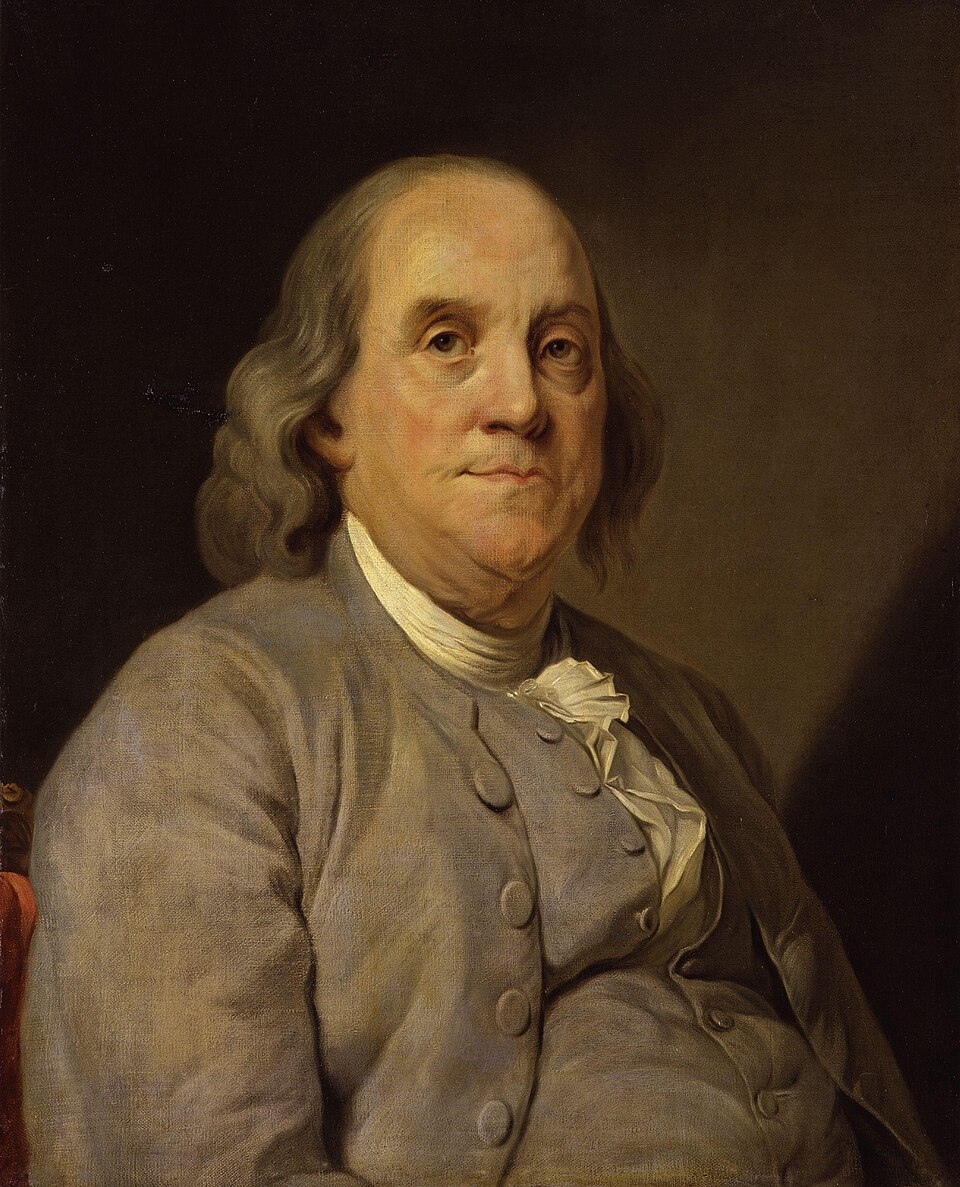
Let's get one thing out of the way. You do not need to earn a fortune to become wealthy, and plenty of people who earn fortunes never do. The link between income and net worth is a lot weaker than the internet pretends. What matters more is the gap between what comes in and what goes out, and what you do with that gap over a long stretch of years.
That sounds like a fortune-cookie line until you put numbers on it. So let's put numbers on it.
The one chart that should change how you think
Take someone earning a median-ish salary who manages to invest $500 a month. Not heroic. The price of a modest car payment people sign up for without blinking. Invested in a low-cost broad index fund earning a long-run average return, that $6,000 a year doesn't grow in a straight line. It bends upward, slowly at first, then alarmingly fast.
After 10 years they've put in $60,000 and might have roughly $86,000. Fine, not life-changing. After 20 years they've contributed $120,000 and are sitting near a quarter-million. After 30 years the contributions total $180,000 but the account is somewhere around $590,000, because by then the growth on past growth dwarfs anything they're adding. The last decade does more than the first two combined.
This is compounding, and it's the closest thing to magic that finance has. Albert Einstein supposedly called it the eighth wonder of the world. He almost certainly never said that, but the idea outlived the misattribution because it's true. The brutal catch is that compounding pays out at the end, which means the single most valuable input isn't money. It's time. A 25-year-old investing modest amounts will usually beat a 40-year-old investing aggressively, and it isn't close.
The best day to start was years ago. The second best day is the one you're having.
If you want to sanity-check any of these figures yourself, the U.S. Securities and Exchange Commission runs a free compound interest calculator at Investor.gov. Plug in your own number instead of mine. The shape of the curve won't change.
The order of operations nobody teaches
Most people try to do everything at once, get overwhelmed, and do nothing. There's a better way, and it's a sequence. Money has a priority list, and following it matters more than optimizing any single rung.
- Cover the basics and a small buffer. Before anything clever, get a starter emergency fund of a few hundred to a thousand dollars. It stops a flat tire from becoming a credit-card spiral.
- Grab the free money. If your employer matches retirement contributions, contribute at least enough to get the full match. It's a guaranteed 50% or 100% return on day one. There is no investment on earth that beats that, so skipping it is the most expensive mistake in personal finance.
- Kill high-interest debt. A credit card charging 22% is a negative investment. Paying it off is a risk-free 22% return. Do this before you chase the stock market.
- Build the real emergency fund. Three to six months of expenses, in a boring savings account. This is what lets you invest the rest without panic-selling the moment life happens.
- Then invest the gap, automatically, and leave it alone.
That last word, "automatically," is doing more work than it looks. We'll come back to it, because it's where most of the actual wealth gets made.
Why "just invest" is harder than it sounds
If the math is this simple, why isn't everyone rich? Because we are not the rational calculators that old economics textbooks assumed. We're impatient, loss-averse, and easily spooked, and those instincts are precisely wrong for investing.
The psychologists Daniel Kahneman and Amos Tversky spent careers documenting this. Their work on loss aversion showed that the pain of losing $100 feels roughly twice as strong as the pleasure of gaining $100. In a casino that's harmless. In a long-term portfolio it's poison, because it pushes people to sell when markets fall, locking in losses, and to wait timidly on the sidelines when they should be buying. The feeling that something is "too risky right now" is almost always the loss-aversion talking, not the data.
There's a famous, possibly apocryphal study where the investment firm Fidelity reportedly found its best-performing accounts belonged to people who had forgotten they had accounts, or had died. Whether or not the exact study happened, the lesson holds and shows up in real research too: the investors who tinker least tend to do best. As the personal-finance writers at NerdWallet and others keep pointing out, frequent trading and market-timing reliably underperform simply buying a broad index fund and holding it.
The case for boring
This is where Jack Bogle deserves a paragraph. Bogle founded Vanguard and popularized the low-cost index fund, an investment that just owns a tiny slice of the whole market instead of trying to beat it. His insight was almost insultingly simple: most active fund managers fail to beat the market over time, and the ones who do can't be reliably identified in advance, so the smart move is to stop paying people to try and instead own everything cheaply.
Fees are the silent killer here. A fund charging 1% a year sounds trivial. Over a 30-year horizon, that 1% can quietly eat a quarter or more of your final balance, because it's skimming off the compounding base every single year. The math is laid out plainly in plenty of places, including Vanguard's own explainer on how investment costs add up. Cheap, broad, and held for decades beats clever almost every time.
What "automatically" really buys you
Back to automation, because it's the cheat code. When you set up an automatic transfer that moves money into your investments the day after payday, you remove yourself from the decision. You never "decide" to invest each month, which means you never get to "decide" not to. You're using a quirk of human nature, our tendency to stick with defaults, in your own favor for once.
Behavioral economists call this the power of defaults, and it's not a small effect. When countries switched workplace retirement plans from opt-in to opt-out, participation rates jumped from around half to well over 90%. The money didn't change. The default did. You can engineer the same trick at home: make saving the thing that happens unless you actively stop it.
A realistic plan for a normal person
Strip away the jargon and a workable lifetime plan fits in a few lines:
- Spend meaningfully less than you earn, and protect that gap like it's a bill.
- Get the full employer match, every year, no exceptions.
- Clear high-interest debt, then build a real cash cushion.
- Automatically funnel the gap into a low-cost, broad index fund.
- Then, and this is the hard part, do almost nothing for thirty years.
That's it. No day-trading, no crypto moonshot, no second job stealing your weekends. The plan is unsexy on purpose, because the parts of finance that feel exciting are usually the parts that lose money. Excitement and returns tend to sit at opposite ends of the table.
None of this requires a big salary. It requires a gap and patience, and patience is the rarer of the two. Franklin had it right when he framed saving as a habit rather than a windfall. The penny saved compounds; the penny chased after usually doesn't. Build the habit, automate it so your worse instincts never get a vote, and let arithmetic do the rest.